
Written by Dr. Craig Mortensen, DC, IFMCP, QME, IFM-Certified | March 2020, Updated August 2026
We have had 3 other KISS (keep it simple stupid) blogs on depression and how to battle that dark enemy. This is the 2nd installment in our depression series. Part 1 can be found here and part 3 here.
Nervines are a category of herbs that have a calming effect on the nervous system. Many are used for a lot of different conditions. In this post, we will discuss how, why, and when to use these particular nervines for helping anxiety, depression, and other mood disorders.
Specifically, nervines are a class of herbs that provide a restoring and balancing action to the nervous system. They often have a sedative effect on the body and the nervous system, giving you that calm, relaxed, chill feeling. Often used with great results. These herbs are often used in teas, tinctures, extracts, or capsules. My personal preference is to use either teas or capsules. I like the teas because they are coming straight from the source. You are taking the actual herb, steeping it, and drinking the ingredients immediately. This is a good route to take because it is the freshest.
The other way I like to use these herbs is in capsule form. Generally, you are getting a much stronger dose by taking capsules. They are easy to take, you can carry them with you, and they are just all around easy. No waiting for water to boil, tea to steep, hot liquid to cool down, droppers to deal with; they are just easy. There are other ways you can take it, but generally they are not as convenient or effective (in my experience).
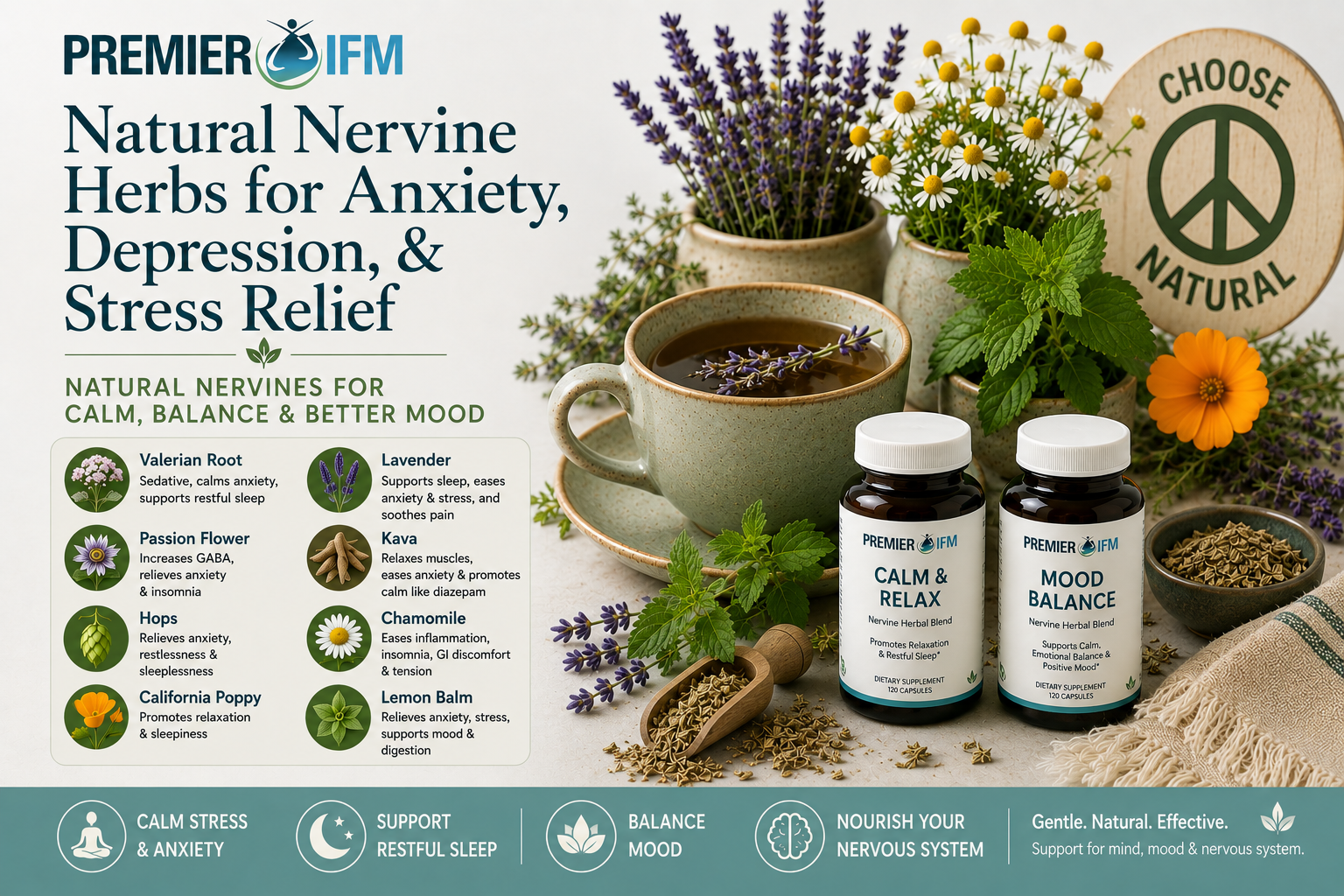
My favorite Nervines
Valerian root - has sedative and anxiolytic, antiseptic, anticonvulsant, migraine treatment, and pain reliever.
Passion flower - a calming herb for anxiety, insomnia, seizures, and hysteria. Works by increasing GABA levels in the brain.
Hops - anxiety, restlessness, and fighting sleepless nights.
California poppy - relaxation and sleepiness
Lavender - including insomnia, alopecia (hair loss), anxiety, stress, and postoperative pain. It is also antibacterial and antiviral.
Kava - prevents convulsions and relaxes muscles, has a calming effect, and produces changes similar to those that occur with calming medicines such as diazepam. Note: Kava should be used with caution and avoided by those with liver conditions or who consume alcohol regularly.
Chamomile - hay fever, inflammation, muscle spasm, menstrual disorders, insomnia, ulcers, gastrointestinal disorder, and hemorrhoids.
Lemon Balm - anxiety, dementia, cold sores, colic, upset stomach, insomnia, stress reduction.
Here are a couple of product recommendations that combine these ingredients. As many of you know, I always advocate using concoctions. Many of these products work well at high doses on their own, but I almost always find that you get more effective results by using them in combination with others. You can also use lower doses.
Written by Dr. Craig Mortensen, DC, IFMCP, QME, IFM-Certified Functional Medicine Physician and founder of Premier IFM in Placentia, CA, serving patients throughout Orange County and Southern California.